


Spring Brings Opportunities!
by Theresa Flynn, District Director
It’s official, we’ve gotten through “fake spring” and we’re in “surprise winter” but soon, very soon, it’s really going to be springtime! I’m looking forward to the air not hurting my face, wearing fewer than four layers of clothes to wait for the bus, and not having to play my least favorite game: Is that really ice on the sidewalk or not?
Spring is a great time to get out and do more! Make those connections, check out events, build your network and maybe, just maybe, try building a new skill. Over the next months we’ve got multiple events going on. Division Contests throughout Wisconsin, the District Conference in Platteville, and I, personally, hope to get out to sample different Culvers in different towns — I’ll warn you before I visit, and I hope to see you there!
If you’re looking forward to completing a Path, and you want to brainstorm ideas for your High Performance Leadership or Distinguished Toastmaster project, the optimism of spring makes it a great time to think ahead. How can you improve your club, District, or community while growing your leadership skills? Let’s brainstorm!
Enjoy the nicer weather and get out and make new connections!
What Flame Ignites You?
by Yuriy Ksenidi, Program Quality Director
February is a strange month. Only 28 days long (in 2026), it features a party called Super Bowl, a holiday dedicated to love and another one that is all about mattress sales. Beyond all this, during these four weeks one sentence is heard throughout offices across the country: “Would you like to buy Girl Scout Cookies?”
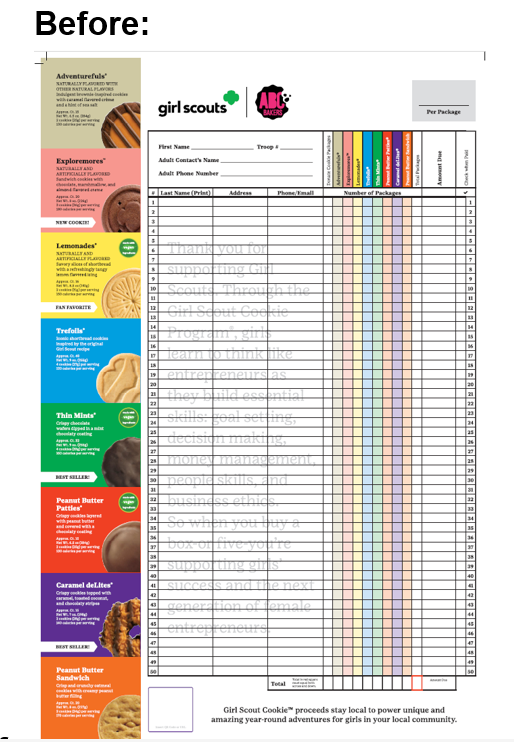 I am no stranger to this octet of words. This year, beyond the thrill of motivating my colleagues to support my niece, I did something different that made me super excited. On February 2, a family member asked me to enlarge the picture of cookies on the order form to be easily seen by potential buyers (see “Before”). After 20 minutes of brainstorming, the brightest light bulb appeared before my eyes. The Snipping Tool! Of course! I got to work and 30 minutes later produced a work of art (see “After”). My family member was thrilled. I was thrilled. The customers must have been thrilled too, since they did not need to squint to make out the cookie descriptions.
 In our District, there are plenty of exciting events happeningin the next four months. Whether you are dashing from one corner of the state to another to catch a speech contest, finishing a level in Pathways, signing up to be a presenter of an education session at the Spring Conference, or showing someone how being Sergeant at Arms builds teamwork and time management skills, embrace the possibilities! Be the one to organize a traveling cheer squad even if your club does not have a contestant. Help a new member enroll in Pathways.
Connect with your Area Director and recommend someone who can teach the rest of us about a topic like resilience. Invite each club in your area to Culver’s for an idea exchange over an ice-cold custard, butter burger, and cheese curds. The next four months will fly by at the speed of light. How awesome would it be if your club could say on June 30 that every single member attended the Spring Conference? Has completed one Level in Pathways? At least one-third of your incoming club officer’s team is brand new. Or all the above?
Each of us has a reason to be in Toastmasters. Find the flame that ignites you and bring your club along for the ride.
Let your success invigorate you and keep the thrill coming.
Momentum Through Cold Outreach
by Bryson Bernarde, Club Growth Director
This quarter, our District has focused on something that doesn’t always generate immediate applause but absolutely builds clubs: cold outreach.
For years in District 35, warm leads have been limited. Now, instead of waiting for opportunities to appear, we’ve been intentional about creating them. That means researching organizations that align with Toastmasters’ mission and reaching out to businesses, nonprofits, and community leaders who may not yet realize how much they need strong communicators and leaders.
Cold outreach requires patience, clarity, and teamwork. That’s why defining roles has been critical.
Keith Hardy, Club Extension Chair, leads the process once interest in Toastmasters is established. When a conversation turns into potential action, Keith guides the journey from initial discussions to demonstration meetings, and ultimately, to charter. He supports sponsors and mentors, keeps timelines moving, and ensures new clubs are built on strong foundations. Extension is where opportunity becomes reality.
Supporting that effort are our Co-Club New Source Research Chairs, Joe Dombleski and Mark Robinson.
Joe brings a strategic lens to research. Identifying new leads isn’t about creating long lists; it’s about finding the right fit. Joe evaluates where communication training would make the greatest impact and helps us focus on outreach where it matters most.
Mark helps translate research into connection. Leads only become meaningful when they become conversations. His focus ensures our outreach is thoughtful, personal, and aligned with real needs.
Together, this structure allows each leader to operate in their strength zone:
- Intentional research
- Consistent outreach
- Sustainable extension
There’s a lesson here for every club. Growth rarely happens by accident. It happens when we identify the work that needs to be done and place the right people in the right roles. When strengths align with responsibilities, momentum builds. Each new club began as a conversation that didn’t exist yet.
Thank you to the leaders stepping into the work of building those conversations. If you’d like to support research, outreach, or extension efforts, we would love to connect.
Let’s keep building.
Aspiring To More
by Robert Wall, Immediate Past District Director
Ever get a crazy idea for a hobby? Maybe you just watched the Olympics, and you think skiing would be fun. You do some research and hit the stores. One trip to your local big-box sporting goods store later, you’re all kitted out. Skis? Check. Poles? Check. The fancy ski jacket that 37 YouTube reviews all agree is the “best of the best?” Check. A bag of other stuff that salesperson pinky-swears you’ll need? Check.
You’ve put a lot of work into shopping for gear. So much work, in fact, that you’re exhausted. The equipment goes into a corner of the garage, to be used “someday.” But someday never comes.
Professional organizers even have a phrase for that corner full of ski equipment – “aspirational clutter.” Because we all have it. Most people have a ton of it. There was an aspiration, but the aspiration never turned into action.
We see that in our clubs all the time, don’t we? Members join and just…. well…. don’t do much. They wouldn’t have joined if they didn’t have some sort of aspiration, right? So, what’s stopping them from translating the aspiration into action?
Do you know?
Have you asked?
“But doesn’t that take a lot of time?” you ask. Maybe. But let me ask a direct question: is it really about the time? Or is it about having a potentially difficult conversation?
If you need to call somebody and talk about the fact they’re not really participating, that feels potentially confrontational. Which makes it a harder call to make. Which means, frequently, it never gets made.
So how do we converse without confronting?
Let me give you a phrase and a frame that have worked well for me.
Here’s a powerful phrase that I’ve found useful. “We’ve found that you’ll get the most value out of this if you….” Fill in the blank with something reasonable for them to do.
And that ties into the frame. You’re framing this conversation as “how can I help you?” You’re not expressing any judgement. You’re not even telling them that they need to do something. You’re just indicating there’s a way for them to get more value and maybe ask them if there’s any way you can help.
For a few people, especially new members, that’s enough. In their minds, they’re paying (both time and money!) for this. Why wouldn’t they want to get their money’s worth?
And if they don’t care, then – stay with me here – you can’t make them care. Repeatedly banging your head against somebody else’s indifference is a sure-fire path to burnout.
Personally, I’ve found that approaching these conversations this way makes them easier to have. It definitely makes them less emotionally draining. And I have to say, given the choice, I much prefer having reasonably pleasant conversations to tearing my hair out trying to fill a bunch of spots on an agenda right before a meeting.
Either way, there’s zero downside to letting your members know you’re looking out for their interests. After all, that’s what leadership is all about, isn’t it? If you have any questions or comments, please feel free to reach out. And have a great rest of the year!
by Keith Cumiskey
 As of July 1 , we must say goodbye to District 35 Toastmasters. There have been many good memories over these past 74 years, so it is fitting that we celebrate with a final event. There will be a dinner and small program held at the Machine Shed restaurant in Pewaukee on Saturday evening, June 6.
All Toastmasters of District 35, past and present, are welcome, as well as interested guests. Details beyond that have yet to be determined.
If you have photos, videos, programs or anything else pertaining to the history of District 35, please let us know. If you would like to help plan the event, please contact Keith Cumiskey at wgamer4159@att.net.
by Harriet Esther Allen, VC5, PM3
Toastmasters helped me articulate a vision for my life, and act on it.
I joined Toastmasters because I was struggling to communicate with my co-workers. I had a passion to speak and direct my thoughts into action but needed help. Completing the Visionary Communication Pathway set me up to articulate my vision. Working through my Distinguished Toastmasters Project, “Visualize District 35,” gave me the opportunity to act. Here are highlights of this journey which I hope will inspire you to keep pursuing your vision with Toastmasters!
The vision statement includes both “what” and “how”:
- Drive innovation and meaningful change to improve the human condition.
- I will do this by presenting and organizing data to help people make better decisions and to encourage leadership in my community.
The purpose of the DTM project is to demonstrate your skills as a leader and public speaker. The project must benefit an organization like Toastmasters, or a non-profit. For this project, I led a team of volunteers and gave two speeches.
There were two parts to this project which ran for a year, from Fall of 2024 to 2025. The first part of the project was to join the 2025-2026 District 35 Realignment Committee representing Division C. The second part was to communicate the realignment changes to the District.
As a member of the Realignment Committee, I used a data visualization tool called Tableau to pull together two data sources into a map of the District. This helped committee members view different options for realignment.
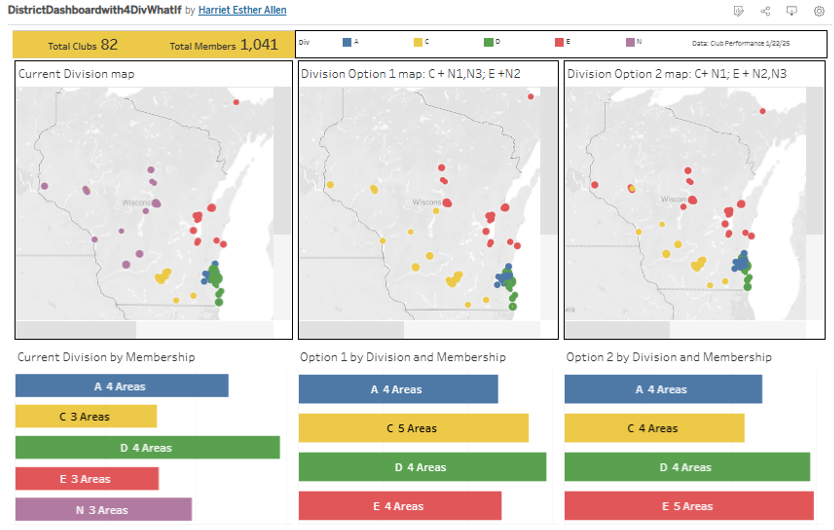
Data Sources:
The second part of the project used “lessons learned” to create a “viz” on the District 35 Website located here. You can navigate to the “Find a Club” button at the top right of your page or under the “About” menu. This shows a current list of all District 35 clubs and a map which identifies their locations. This viz is hosted FREE on Tableau Public. Click on “Share”at the bottom right of the “viz” to copy the link or “embed” the page onto your social media for your club! The member data is refreshed at the end of each dues deadline.
Looking forward, this tool is now being used to support the organization of the new Areas and Divisions for District 212, which begins July 1, 2026.
Toastmasters helped me realize a vision for my life: to drive innovation and meaningful change by presenting and organizing data to help people make decisions as leaders in our community. Imagine how Toastmasters can help you answer both the “what” and “how” of your vision and bring it to life!
By Theresa Flynn, District Director
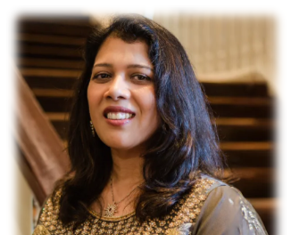 Come join us for networking, contests, education sessions and keynote speaker First Vice President of Toastmasters International, Gauri Seshadri!
May 9 is the Spring Conference in Platteville, and we’re opening registration by March 8! Check with your club on a club registration to provide individual members with discounted rate! Early Bird will only last two weeks, so think ahead.
We can squeeze in about two more education sessions, so please complete this form to propose a session!
https://forms.gle/F5HC2j6to4ALGZaz7

by Rick Grant
Every year, Toastmasters International clubs around the world kick off one of the most energizing traditions in our organization: the annual speech contest series.
For many members, it’s the first time they step beyond the comfort of a regular club meeting and put their skills to the test in a new arena. That’s exactly why you should consider participating.
The contest stage is one of the best laboratories for growth. In your club, you practice fundamentals: structure, vocal variety, body language, timing, persuasion. In a contest, those same skills are sharpened under slightly brighter lights.
You learn to refine your message, strengthen your openings and closings, and deliver with greater clarity and confidence. The experience accelerates your development in a way few other activities can.
“You get comfortable delivering speeches to your home club,” said Rick Grant, a 2025 Area speech winner from Sheboygan Toastmasters 2121. “But when you get feedback from people you don’t know or have just met, it really lets you know how your speech is landing.”
Here’s what many members don’t realize: the speech contest series isn’t just about competition. It’s about connections.
As you advance beyond the club level, you meet members from other clubs, Areas, and Divisions. You hear different styles, fresh perspectives, and powerful stories. You build friendships across your District. The contest environment is competitive, yes, and it is also deeply supportive.
Toastmasters members want you to succeed, and if you ask, they will give you thoughtful feedback. It’s one of the safest places you will ever find to stretch yourself publicly. There is also something uniquely rewarding about stepping onto a larger stage and discovering that you belong there.
You may not win a trophy. That’s not the point. The real prize is growth: stronger confidence, sharper storytelling, and a deeper sense of community within the organization.
This year’s contest series is already underway, and clubs around the world are competing at the Area and Division levels. This spring, the winners will advance to their District contests. A few will go on to compete in Vancouver, British Columbia, Canada, from August 19–22, 2026, at the Toastmasters International Convention.
You can still be in the audience to cheer contestants on. You’ll meet some great people. And it might inspire you to compete next year.
Check the District calendar and remember: The Toastmasters speech contest series isn’t just an event on the calendar; it’s an opportunity to discover what you’re truly capable of becoming.
by Christa Vanderheiden
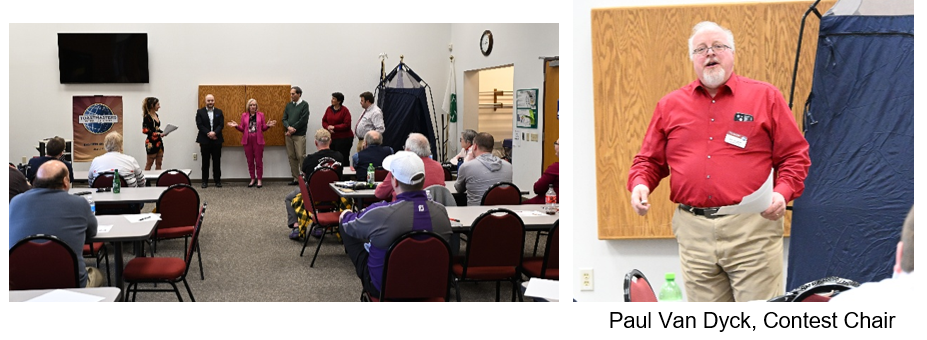
With our newly aligned Division this year, we have two new Area Directors who have neither competed in nor organized speech contests. We in Eastern Division stripped the process down to basics when it came to our combined Area competition on February 14. Paul Van Dyck, our Contest Chair, sought out the expertise of Kris Pool, DTM, as our Chief Judge. Together, they coached up their fellow Area Directors as we collaborated on the many aspects of planning a speech contest from recruiting contestants, soliciting for functionaries, and developing marketing strategies and materials.
Fresh out the gate, our very own Teah Koval, Area Director E4, stepped up as the Contest Toastmaster, having been the MC for the Holiday Speaktacular event hosted by the Stevens Point Club. We learned quite a bit about the importance of announcing house rules, debriefing, and adjourning contests. Albeit, although we experienced hiccups, we were able to view this contest as a fantastic teaching opportunity. We ended our contest with a debrief from Kris, who highlighted not only what went well but also identified where we could focus to excel in the future.
As we gear up for our Eastern Division Contest on Saturday, March 21 at the De Pere Community Center, we hope to put these lessons into practice by hosting an even more impressive speech contest this go-around.
by Darian Houle
When I first started with Toastmasters, I was not a fan of public speaking or giving a speech. I avoided speech class in college because I wasn’t comfortable standing up in front of people giving a speech. The reason I joined Toastmasters was not to become comfortable but to gain a better understanding of how to give a speech and to learn the nuances of speaking. One way I started feeling more comfortable is by taking on the newsletters for the club, which led to being more confident in making impromptu speeches. For me, that was a step I never imagined myself being comfortable with or even attempting.
Now that it’s been almost a year and eight speeches later, I am finding that I like public speaking and giving speeches. If you were to ask me that two or three years ago, I would have told you, “You’re out of your mind.” Finding a place that welcomes you, lets you make mistakes, and encourages mistakes is what makes learning to speak and giving speeches fun in a way that works for me.
Toastmasters isn’t just about learning to give a speech; it also teaches leadership and how leadership can transform your ability to be confident when speaking or giving a speech. It’s a process, and it does not happen overnight! I am learning, and it’s about trusting yourself and knowing that you can do it if you try. It’s about taking the first step, and once you do, finding that it’s not as hard as you had thought.
I’d also like to share that I never saw myself joining Toastmasters. The main reason was that I was afraid to speak in front of others. But now, after being a member for nearly a year, I have a completely different perspective on speaking and giving speeches. That perspective is: It’s not as scary as it may seem. It’s actually fun! And the people in the club are there to support and encourage me. It’s all about making mistakes, learning from them, and seeing myself grow with every speech.
FAIL = First Attempt In Learning – and that is the first step in Toastmasters: learn to fail, and you will find success.
by Jessica L. Murray
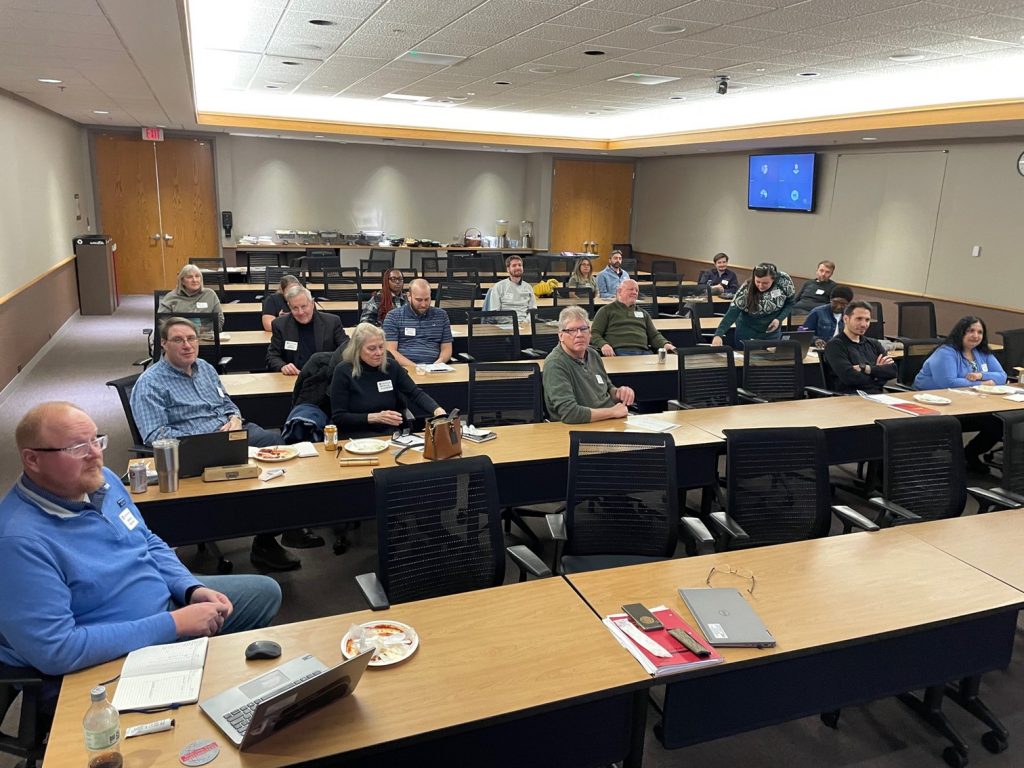
On Wednesday Jan 21, the corporate GE Speaks club hosted an open house at the GE HealthCare office in Waukesha, WI.
We were excited to welcome over 15 guests who attended the Open House. GE Speaks provided snacks over the lunch hour and hosted a meeting so guests were able to experience what it would be like to attend a Toastmaster meeting. Guests learned the value of practicing leadership and public speaking skills, impromptu speaking, and having fun in a safe and supportive learning environment.
The meeting was a lot of fun and high energy as we all met in person! Our club normally meets virtually so it was a welcome change of pace. We are excited to welcome some new members to our club in the coming weeks after they have had a great experience at the Open House. GE Speaks is excited to keep the momentum moving forward as we get further into 2026!

by Jill Keating
What is Valentine’s Day without a little romance? On February 12, DJAB folks got together online to screen three somewhat unconventional rom coms. They’ve had these nights before and tend to chat throughout about old tropes and silly dialogs. That’s the best part! While DJAB is all heart, they’re not about the mushy feelings, so they decided to mix it up a bit.
First on the playlist was “How to Train Your Puppy Husband.” It was a semi-conventional exploration of male/female relationships, while sharing cute puppy moments and making fun of a very uptight couples’ therapist who demonstrated serious issues of her own.
Next was a bigger hit, “Isn’t It Romantic,” with Rebel Wilson, Adam DeVine, and Liam Hemsworth, among others. That one is a truly tongue-in-cheek send-up of romantic comedies. It shamelessly makes fun of their predictable nature while following along with its own formula. Hilarious.
Coming up last was “A 90s Christmas,” an absolute Hallmark flick. The throwback nature was nostalgic fun, and it was made even more entertaining by DJAB members pointing out all of the clichés that the previous movie exposed.
In all, DJAB recommends holding movie nights of your own. Whether dramatic or goofy, they’re a great way to promote camaraderie and spend a fun night together!
by Matt Wuteska
ROK the Talk held an open house on January 28th of this year for everyone to come see what our club is all about. We are usually pretty exclusive to our corporate ties with Rockwell Automation, but we also allow those outside our club to attend. We try to hold an open house yearly in the January/February time-frame. Since we have a captive audience with an easy-to-attain mailing list, we invite the whole Mequon/Milwaukee campuses to attend. Our group is mainly focused in Mequon, so that’s where we had our open house.
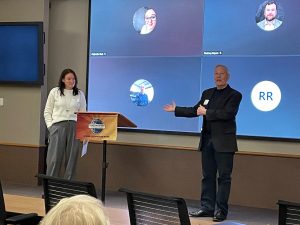 The work of our officer team put together a great event. Lead by Lidie Kientega (VP Public Relations), our group had a fantastic lunch brought in, and arranged an exciting lineup of speakers and Toastmasters to run the meeting. Our executive sponsor gave a passionate speech about how Toastmasters helped his career. He went on to explain that he not only believes in our mission, but fully supports our club. We were then honored to have the ‘infamous’ Keith Cumiskey give a speech about how Toastmasters has affected his life. He was evaluated by the equally ‘infamous’ Nelly Gillman. These two were pillars in the Rockwell Toastmaster world. For our guests, we 3D printed drink coasters with a ROK the Talk logo on it.
A huge thanks to everyone who helped make this open house a fantastic event. We ended up getting six new members from our event! Everyone was impressed with how the club conducts itself. It’s formal, yet laid back, and we stress the no-pressure approach. We are a safe place to speak, try new things, and expand your communication and leadership abilities!
by Dave Pittman
When Menomonee Falls Toastmasters went to a virtual meeting format during covid and then to a hybrid format, we noticed a silent casualty: the “slip of paper” feedback. While our formal evaluators remained solid, those insightful and encouraging notes that speakers once cherished had nearly vanished.
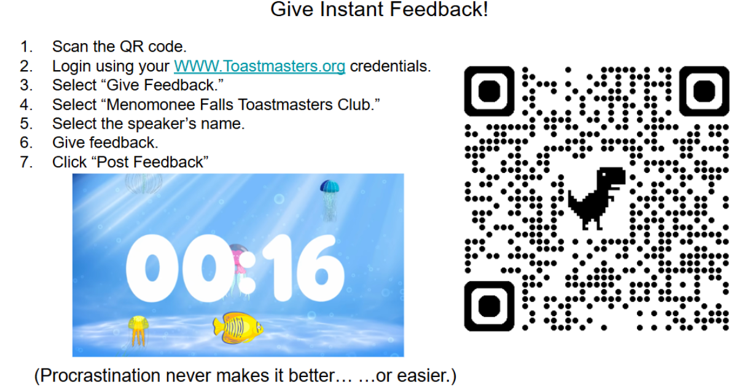
Toastmasters International’s Base Camp provides a digital feedback system, but we found that members often intended to provide it after the meeting, only to let it escape their minds. Our solution? Merge the “in the moment” motivation of paper slips with the digital efficiency of Base Camp Feedback.
Now, during the three-minute evaluation period following each speech, we display a QR code on both our in-room and Zoom screens. We also share a direct link in the digital agenda.
Members scan the code with their phones, log in to Toastmasters.org, and are whisked directly to the feedback module. In seconds, they select the speaker’s name and type their spontaneous insights. They can also use voice-to-text for even faster input. To keep everyone focused, we display a mildly amusing countdown timer on the screen.
The result? We have achieved nearly 100% participation. By capturing inspiration the moment it strikes, we’ve ensured our speakers receive the broad feedback they need to thrive.
by Susan Brushafer, Pathways Mentor
A strong start is one of the most reliable predictors of long‑term member retention in Toastmasters. When new members feel welcomed, guided, and confident in their first few weeks, they are far more likely to stay, participate, and grow. But a Mentor Team? I wish I had thought of it earlier!
The Menomonee Falls Toastmasters Club Success Plan set a goal of 30 active, dedicated members by June 30. We’ve all worked hard to add new members this year. It has paid off; in February we welcomed four new Toastmasters!
As current and past Vice Presidents-Education know, our role carries significant responsibility for helping members begin their Toastmasters journeys. Our club has done its best with long-term individual mentors working one-on-one with new proteges. When four or more members are added, those core members appreciate support. Could a Mentor Team ensure excited new Toastmasters feel at home by introducing consistent information about our club’s website and toastmasters.org, explaining meeting roles, and helping prepare early Pathways speeches?
In December, I approached our Club Council with the idea of a Mentor Team. They were supportive and participated in the February 7 kick-off meeting. Although we have many club members who have been with us for less than a year, everyone was invited to the Mentor Team meetings.  The October 2025 Pathways Enhancements now include in Level 3 the role of ‘Introductory Mentor.’ The role is described “as a member who unofficially supports new members by answering questions and guiding them based on their own experiences.”
The guide for being a mentor in our club meshes nicely with sharing personal experiences: be one step ahead of the protégé you’re guiding. What does that look like? You’ve given your Ice Breaker, have held a meeting role or two, and are actively working in Level 1. Coming to monthly Mentor Team meetings is a bonus. The sharing nature of the meetings also means any member can drop in to get his or her specific club or Pathways questions answered. Win-win!
As Toastmasters International reminds us, “The club is the place where members find support, encouragement, and the opportunity to grow.” A Mentoring Team strengthens that promise by ensuring every new member experiences this from day one.
Will the shared approach help new members feel a part of your club? Will a Mentor Team that shares experiences help member retention and grow new mentors? Will your Vice President-Education breathe a bit easier? I invite you to check in with me a year from now!
2025-2026 Third Quarter Triple Crown Awards
| Bonnie Jean Alford | The Breakfast Club |
| Edward Thelen | Oak Creek Toastmasters |
| Janet Ward | Rolling Hills Club |
| Ranee Graf | Wisconsin Rapids Area Toastmasters Club |
| Rick Czaplewski | Tosa/Medical Club |
| Robert Lambert | Rolling Hills Club |

Pathways Mentor Program
| Edward Thelen | Oak Creek Toastmasters |